


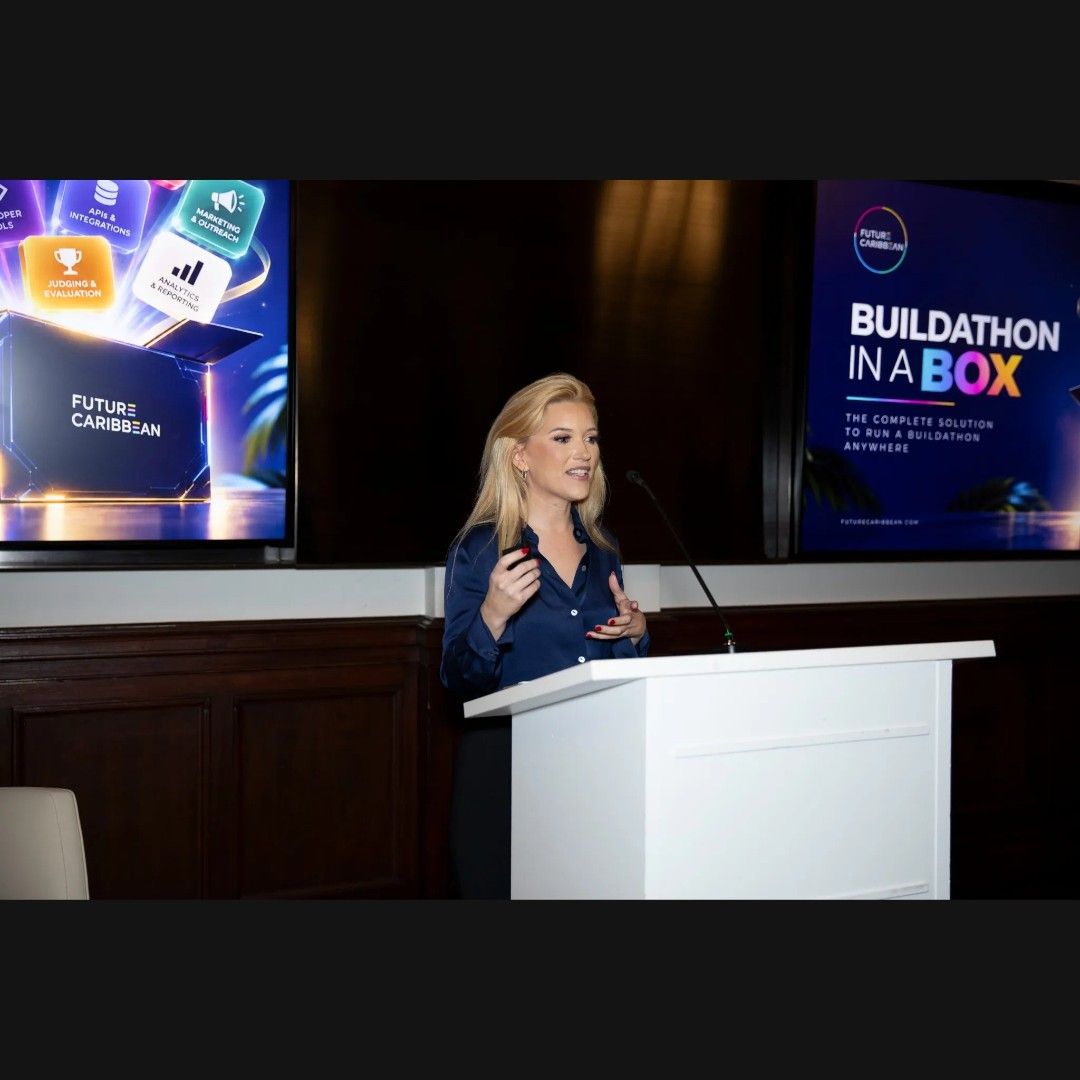
Originally published by WorldsEdge Media · By Lily Dash Speaking at Future Caribbean New York Stock Exchange Showcase November, 2026. Read it on WorldsEdge Media
WorldsEdge Media | Futurist | News Analysis | November 24, 2026
As international capital flows into the Caribbean’s emerging technology sector, entrepreneur Lily Dash is cultivating a generation of founders with the potential to redefine the region’s place in the global economy.
In 2020, Medici Ventures, then a subsidiary of Overstock.com, invested an additional $8 million in Bitt, a financial technology company founded in Barbados. Less than a year later, the Central Bank of Nigeria selected Bitt as its technical partner in developing the eNaira, the country's central bank digital currency.
A company originating on an island in the eastern Caribbean had become instrumental in developing financial infrastructure for Africa's most populous country.
Six years later, entrepreneur and attorney Lily Dash is exploring how more technology companies of international consequence can emerge from the region through her organization, Future Caribbean.
On Nov. 13, Dash co-hosted an investor showcase at the New York Stock Exchange with Silicon Valley venture capitalist Bill Tai, an early investor in Canva and Zoom. Emerging technology companies presented their innovations before an audience of investors, business executives and Caribbean diplomatic representatives.
The event marked the culmination of Future Caribbean's inaugural Global Agentic AI Buildathon, which launched in May during IDB Invest Sustainability Week in Barbados.
Initially conceived to accommodate 40 teams, the program expanded considerably, attracting 236 team applications and more than 450 developers from 39 countries. Participants gained access to computing resources, technical expertise and commercial advisers.
For an initiative less than a year old, the international participation is particularly noteworthy. So is the timing.
In August, Google announced Alisios, a subsea cable system that will connect the Dominican Republic, Panama and Chile as part of its Americas Connect network. The investment will introduce additional telecommunications infrastructure connecting the Caribbean with markets throughout the Americas.
Trinidad and Tobago is exploring a different technology industry, with preliminary agreements involving two proposed data center developments with a combined capacity of 450 megawatts. Their realization will depend in part on the country's ability to accommodate the substantial energy requirements of such facilities.
Meanwhile, in the Federation of St. Kitts and Nevis, the proposed Destiny development on Nevis has attracted international attention. Led by cryptocurrency investor Olivier Janssens, the project has also prompted debate about governance, environmental resources and the terms under which international developers should operate within small island nations.
These developments raise an important economic question. As international investment in technology infrastructure increases, what opportunities will exist for Caribbean entrepreneurs to build and own the technologies deployed throughout the region?
Future Caribbean is developing a business around that opportunity.
Established with founding partners IDB Invest, ACTAI Global and ACTAI Advisors, the organization connects developers with prospective customers and institutions interested in acquiring AI technology. Its venture studio and enterprise services are intended to help companies progress beyond product development into commercialization.
Some of the technologies presented during its inaugural program offer an intriguing perspective on what Caribbean innovation could contribute to the global AI industry.
Andrew Narine, founder of Caribbean Grid AI, is developing technology that could help electricity providers anticipate fluctuations in renewable energy production and make more informed decisions about how electricity is distributed.
Simon Neptune of Trinidad and Tobago presented technology through Neptune Energetics that explores how thermal energy discarded by industrial facilities could be recovered and put to productive use.
Both applications are particularly relevant to the increasing energy demands of the technology industry itself. As countries compete to accommodate data centers and other forms of computing infrastructure, the ability to generate, conserve and distribute electricity efficiently is becoming a commercial imperative.
Caribbean Grid AI received top honors at Future Caribbean's November showcase.

Caribbean Grid AI, Neptune Energetics and Mirra won a combined $50,000 at Future Caribbean’s inaugural Global Agentic AI Buildathon on Nov. 13, 2026, at the NYSE.
Beyond energy, some of the more fascinating applications emerged during the organization's October Demo Day in Barbados.
Daniel Ché Mc Dougall presented OceanX, an AI research assistant for scientists studying marine ecosystems. His demonstration examined whether corals exposed to the 2023 marine heatwave in Bonaire might produce proteins capable of protecting cells from damage.
Monique Shanaz Sewell-Bennett presented Yadli, a platform designed to help Caribbean property owners and members of the diaspora oversee construction projects remotely through documented milestones, photographs and payment approvals.
These ventures are at different stages of development. Nevertheless, their applications illustrate the breadth of scientific and commercial opportunities that exist within Caribbean economies.
Future Caribbean is also offering organizations the opportunity to commission their own technology challenges. A company can introduce an operational problem to a network of developers and participate in the process of identifying and developing a solution.
The model could be particularly useful to Caribbean hotel groups, financial institutions and utility companies with specialized operational requirements that existing international software providers may not adequately address.
There is already a precedent for technology entrepreneurship in the region. Barbados gave rise to Bitt. Jamaica's Amber Group developed into a regional technology services provider, while Trinidad and Tobago's WiPay has worked to expand digital payment services for Caribbean businesses.
What Future Caribbean introduces is an opportunity to cultivate more of these companies within a rapidly evolving technological discipline.
Historically, geography has influenced where industries develop, where investors allocate capital and where ambitious individuals relocate to pursue their careers. Artificial intelligence introduces an opportunity to reconsider some of those geographical assumptions.
The Caribbean has long attracted international investment in tourism, hospitality and real estate. What Future Caribbean brings to the investment conversation is the commercial potential of the region’s intellectual capital.
